 The Rome Index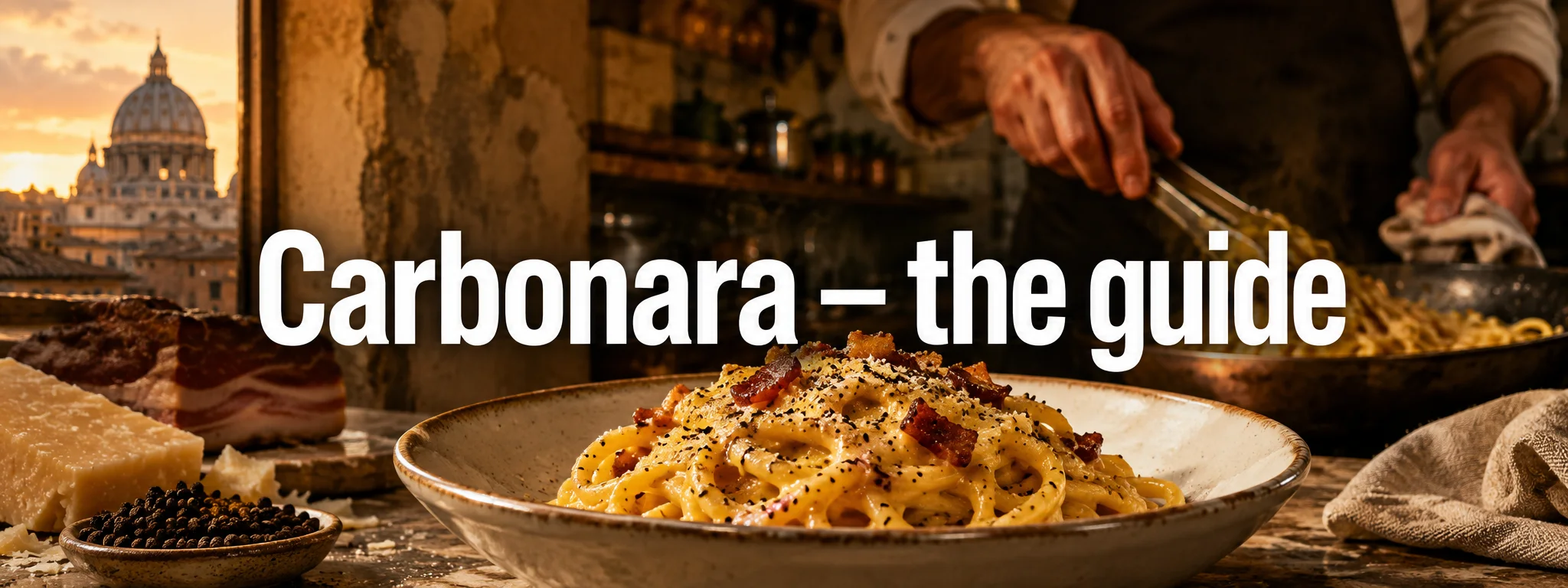
Carbonara — the guide
The most argued-about pasta in Italy. Here's what's actually in it.
What's actually in it
Guanciale (cured pig cheek), Pecorino Romano, eggs (whole eggs plus extra yolks), black pepper and pasta water. That is all. No cream — this is a non-negotiable rule, not a stylistic preference. No onion, no peas, no pancetta as a substitute for guanciale if you want the authentic version.
The technique
The sauce is made off the heat — the residual warmth of the pasta and a splash of starchy cooking water emulsify the eggs and cheese into a silky coating. Add heat and you get scrambled eggs. The temperature control is the whole skill of the dish.
The mythology
The dish first appears in Italian cookbooks in the 1950s, possibly influenced by American troops bringing bacon and eggs to Italy during or after the Second World War — though the exact origin remains genuinely disputed. Romans who care about it find the debate tiresome; they just want you to make it correctly.
The postwar origin theories in more detail
Beyond the American soldier connection, some historians propose the dish evolved from earlier shepherd (carbonaro, 'charcoal burner') traditions in the Apennine mountains, using ingredients that kept well without refrigeration — the true origin likely combines several influences rather than a single clean invention story, despite the confident narratives often presented.
Restaurant variations worth being wary of
Menus offering carbonara with cream, peas, mushrooms or ham are catering to international expectations rather than Roman tradition — while not necessarily bad food, a menu advertising these additions is a useful signal that the kitchen may be adapting rather than preparing the dish in its traditional Roman form.
