 The Rome Index
Roman cuisine guide
The dishes that define Roman food, and where they actually come from.
The four pastas
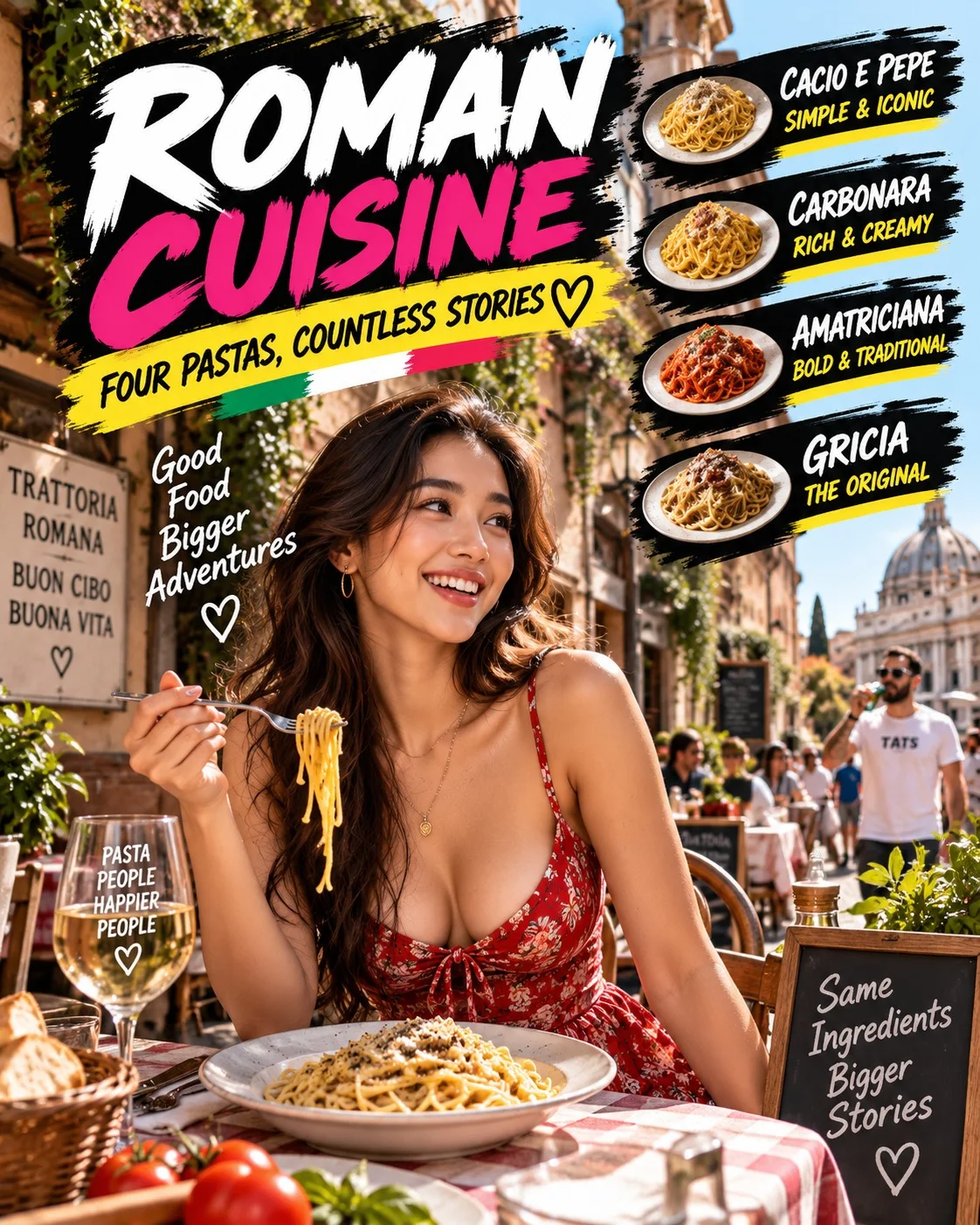
Cacio e pepe, carbonara, amatriciana and gricia — Rome's core pasta dishes, all built on a handful of shared ingredients: guanciale, pecorino, and black pepper.
Beyond pasta
Carciofi alla romana (braised artichokes) and supplì (fried rice croquettes) both trace back to Rome's Jewish and working-class culinary traditions.
How to tell a good trattoria
A short, seasonal menu is a better sign than a long one with photos of every dish.
The philosophy behind it
Roman cooking is built on cucina povera — 'poor kitchen' cooking that turns inexpensive, humble ingredients (offal, stale bread, foraged greens, cheap cuts) into dishes of real sophistication through technique rather than costly ingredients. Understanding this history explains why the city's most celebrated dishes are built from what were once the cheapest parts of the animal or the plant.
Seasonality still matters
Despite Rome's modern supermarket culture, traditional trattorias still shift their menus with the seasons more than visitors might expect — carciofi (artichokes) in spring, fresh porcini and truffle in autumn, fave and peas in early spring. A dish appearing only part of the year is often a sign of a kitchen taking the ingredient seriously.