 The Rome Index
Best time to visit Rome
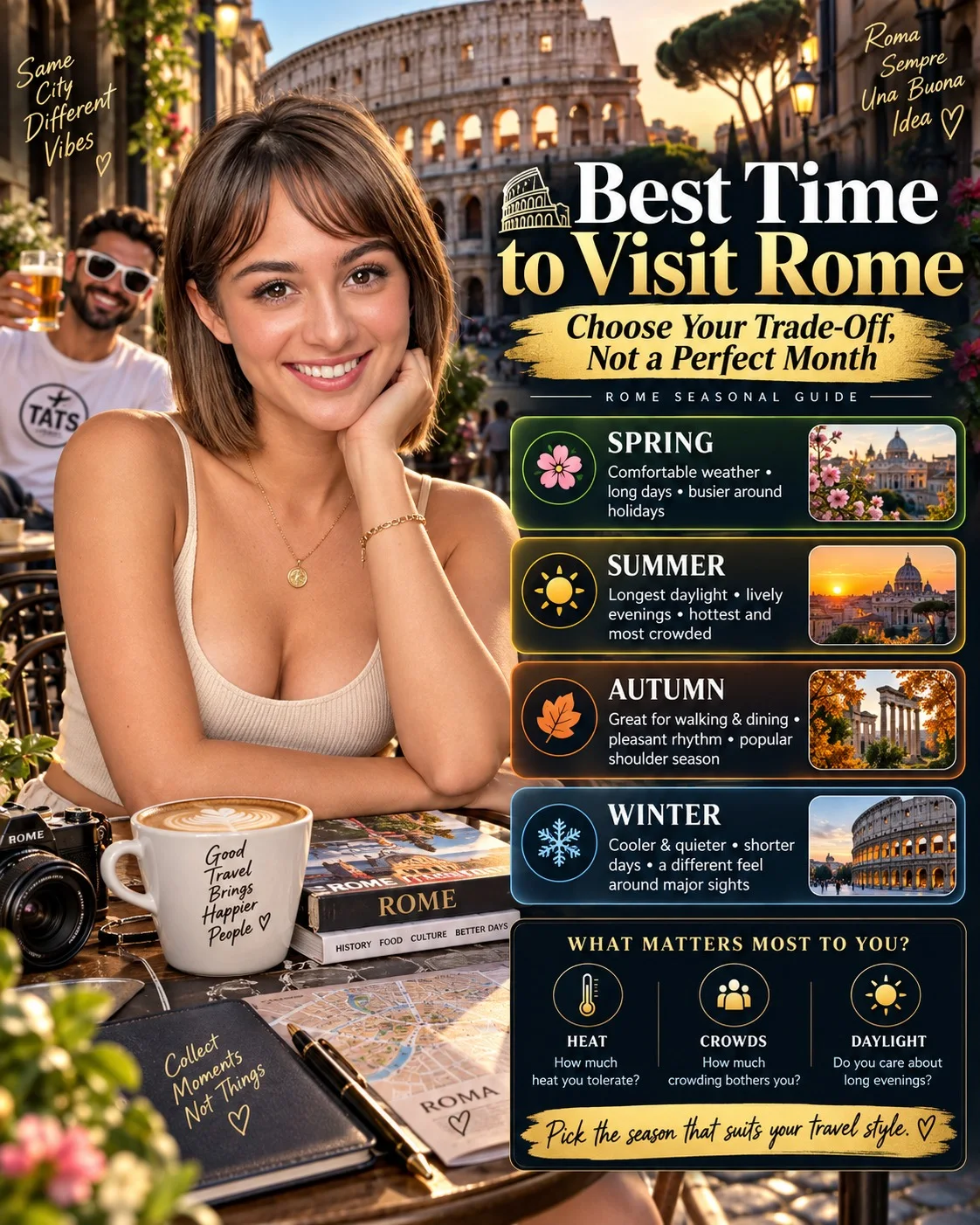
The best month depends on your tolerance for heat, crowds and fixed dates. Use this season-by-season guide to choose the trade-off that suits your trip.
The quick answer
For most first-time visitors, late April to June and September to October offer the easiest balance of long sightseeing days and manageable temperatures. They are not quiet months, though: Rome is busy whenever the weather is comfortable. If low accommodation costs and lighter crowds matter more than sitting outside late into the evening, winter can be a very good fit.
Spring: excellent weather, serious demand
March starts changeable, then April and May become some of the city’s most comfortable walking months. That makes spring popular rather than secret. Easter can sharply increase demand around the Vatican and historic centre, so travellers tied to those dates should book headline attractions and accommodation early. By June, days are long and the city can already feel hot in the afternoon.
Summer: plan around heat, not just crowds
July and August suit travellers who like long evenings and can tolerate high heat. The practical mistake is building a midday-heavy itinerary: put the Colosseum, Forum, hills and long neighbourhood walks early, save churches and museums for the hottest hours, and carry water. August remains a normal tourism month even when many Romans take holidays; some small independent businesses may close around Ferragosto, but major sights and visitor services continue operating.
September and October: the easiest all-round choice
September often keeps summer warmth while the worst heat eases, and October can be excellent for long walks and outdoor dining. Both months remain popular, especially at major attractions, so “shoulder season” should not be read as “no queues”. They work best for travellers who value walking comfort more than bargain pricing.
Winter: better value and more breathing room
November through February brings shorter days, cooler weather and a greater chance of rain, but also a less relentless sightseeing rhythm outside Christmas and New Year. It is a strong choice for museums, food and neighbourhood time. January and February can be particularly appealing if you are flexible about weather and would rather spend less time competing for peak-season rooms and restaurant tables.
April, Easter and major-event weeks
Rome can change character around Easter, large religious events, major concerts and citywide sporting weekends. Even when a month is normally comfortable, a fixed event can make hotels and transport busier for several days. Check your exact dates against the city calendar before assuming a spring or autumn week will behave like an average week.
When weather matters most
Rome is a walking city. If heat drains you quickly, prioritise April, May, late September or October rather than July and August. If rain is your bigger concern, accept that no cool-season month is guaranteed dry and build an itinerary with indoor alternatives. The best weather strategy is less about chasing a perfect forecast than choosing a season that makes six to ten kilometres of daily walking comfortable for you.
When budget matters most
Flights and hotel rates move far more than local transport costs. Travellers with flexible dates usually get more leverage by shifting out of peak spring, early-summer and September demand than by obsessing over small daily savings. Compare the same hotel across several date windows before booking; a modest change of week can matter more than a cheap meal or transport pass.
When crowds matter most
There is no truly empty Rome. The best way to reduce crowd stress is to combine a quieter season with better timing: visit outdoor icons early, reserve timed attractions, and spend part of each day outside the Trevi–Pantheon–Vatican–Colosseum circuit. Winter helps, but good route planning matters in every month.
A month-by-month planning guide
January and February favour museums, food and lower-pressure sightseeing. March is transitional. April and May are superb for walking but can be busy, especially around Easter. June brings long days and rising heat. July and August demand heat-aware pacing. September stays warm and popular. October is one of the strongest all-round choices. November is quieter and changeable. December combines cooler sightseeing weather with Christmas and New Year demand around the centre and Vatican.
What to book before you choose a month
Before locking flights, check whether the attractions that matter most will fit your dates. The Colosseum, Vatican Museums and Galleria Borghese are much easier when treated as timed anchors rather than spontaneous stops. If your trip depends on a specific museum, event or day trip, verify its official calendar first and build the rest of the itinerary around it.
Best season by traveller type
First trip with lots of walking: late spring or early autumn. Heat-tolerant traveller chasing long evenings: summer. Museum-and-food trip with flexible weather expectations: winter. Families with young children: avoid the hottest weeks if possible. Photographers: winter and shoulder-season mornings give more comfortable time outdoors. Budget-focused travellers: compare November–February dates outside the Christmas/New Year peak.
Our planning rule
Choose the month for the hardest part of your trip, not the easiest. If the trip depends on outdoor archaeology, avoid severe heat. If it revolves around museums and food, winter weather is less of a drawback. If you only have fixed school-holiday dates, keep the dates and change the daily schedule instead of worrying that you picked the “wrong” season.