 The Rome Index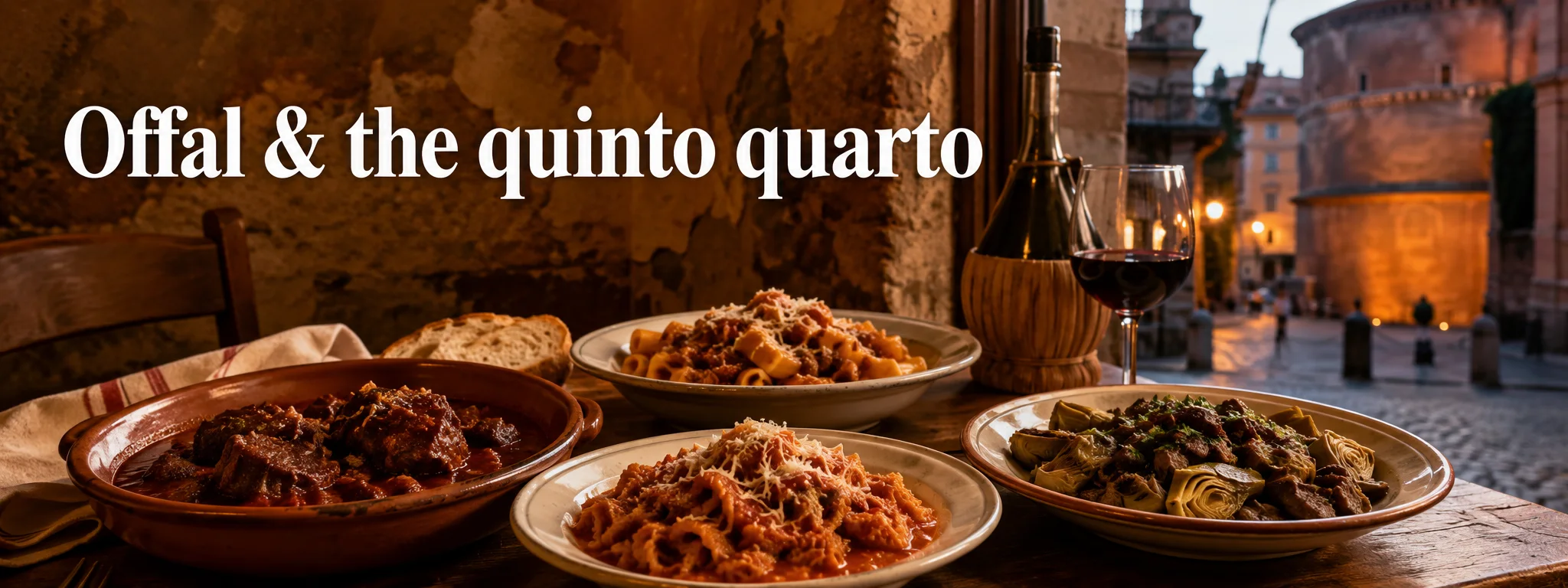
Offal & the quinto quarto
Rome's most distinctive culinary tradition — the fifth quarter of the animal.
What it is
Quinto quarto — literally "fifth quarter" — refers to the offal and extremities of an animal: tripe, liver, heart, lung, tail, tongue, brain and intestines. In Rome, cooking these parts was a working-class necessity; it has since become the city's most distinctive culinary tradition.
The dishes
Coda alla vaccinara (braised oxtail with tomato and celery), trippa alla romana (tripe with pecorino and mint), rigatoni con la pajata (pasta with calf intestines) and coratella (pan-fried offal with artichokes) are the classics. Acquired tastes, but impeccably executed at the right places.
Where to try it
Testaccio — historically the slaughterhouse district — is where to eat quinto quarto. The trattorias here have been cooking it for generations, and the quality is measurably better than anywhere else in the city.
The 'fifth quarter' name explained
The term quinto quarto ('fifth quarter') refers to the parts of a butchered animal beyond the four standard quarters — historically the cheapest, least desirable cuts, given as partial payment to slaughterhouse workers rather than sold, which is precisely how this cuisine took root in working-class Testaccio.
Approaching it as a curious first-timer
For visitors hesitant about offal specifically, trippa alla romana (tripe in tomato sauce) is often the most approachable entry point — the texture and flavour are less distinctive than more assertive options like pajata, making it a reasonable first taste of the tradition without the steepest learning curve.
