 The Rome Index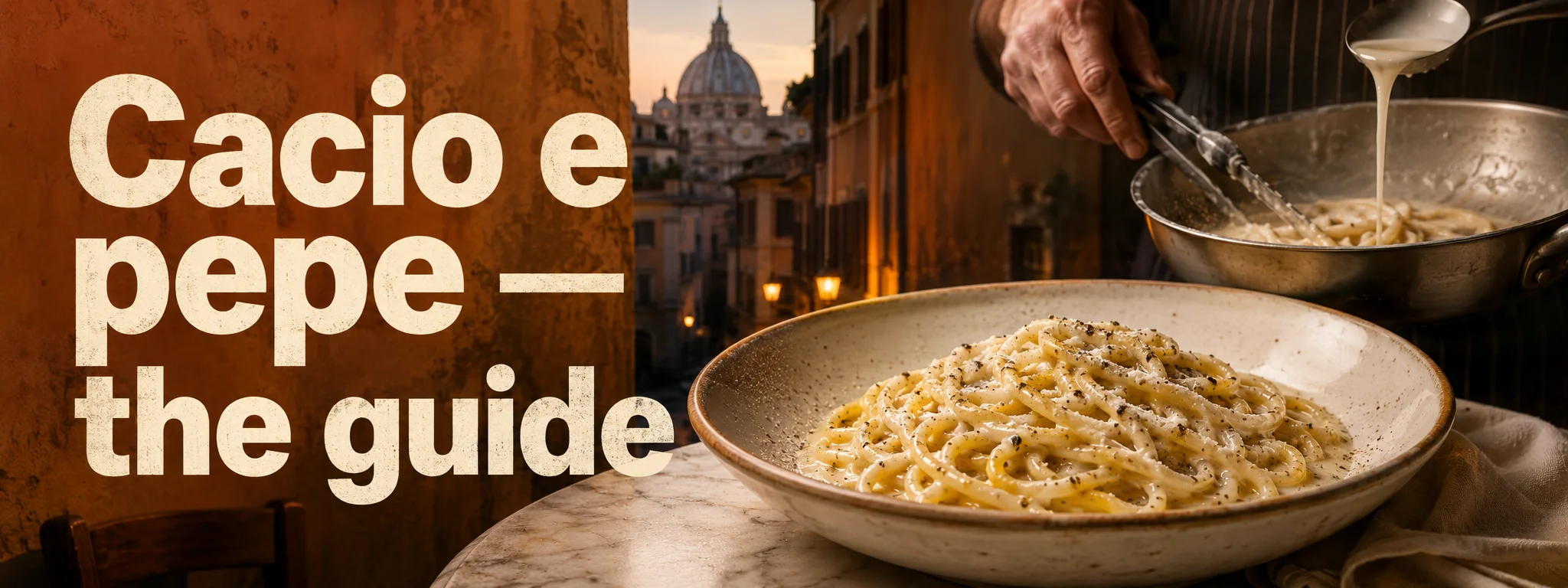
Cacio e pepe — the guide
Rome's most famous pasta: three ingredients, endless ways to get it wrong.
What it is
Three ingredients: tonnarelli or spaghetti pasta, Pecorino Romano cheese, and black pepper. The technique is the whole dish — the cheese must emulsify into a smooth sauce with pasta water rather than clumping into a stringy mess, which takes practice and the right ratio of starch to fat.
How to spot a good one
A correct cacio e pepe is glossy, cohesive and clings to the pasta. A bad one is either dry and powdery or has visible clumps of unmelted cheese. The pepper should be coarsely cracked and toasted, not fine ground — you should be able to smell it hitting the hot pan.
Where to eat it in Rome
Testaccio and Monti both have trattorias where it's made properly. Avoid anywhere listing it at under €10 in the tourist center — the ingredients alone make that implausible unless something's been compromised.
The emulsification problem, explained simply
The core technical challenge is that cheese proteins can seize and clump when they meet heat too quickly — professional and skilled home cooks manage this by controlling temperature carefully and adding starchy pasta water gradually, a technique that takes genuine practice to master consistently.
Why it's considered a test of a kitchen's skill
Because the dish has so few ingredients and so little room to hide technical error, many Romans consider a restaurant's cacio e pepe a reliable indicator of the kitchen's overall competence — a poorly executed cacio e pepe is taken as a genuine warning sign about the rest of the menu.
