 The Rome Index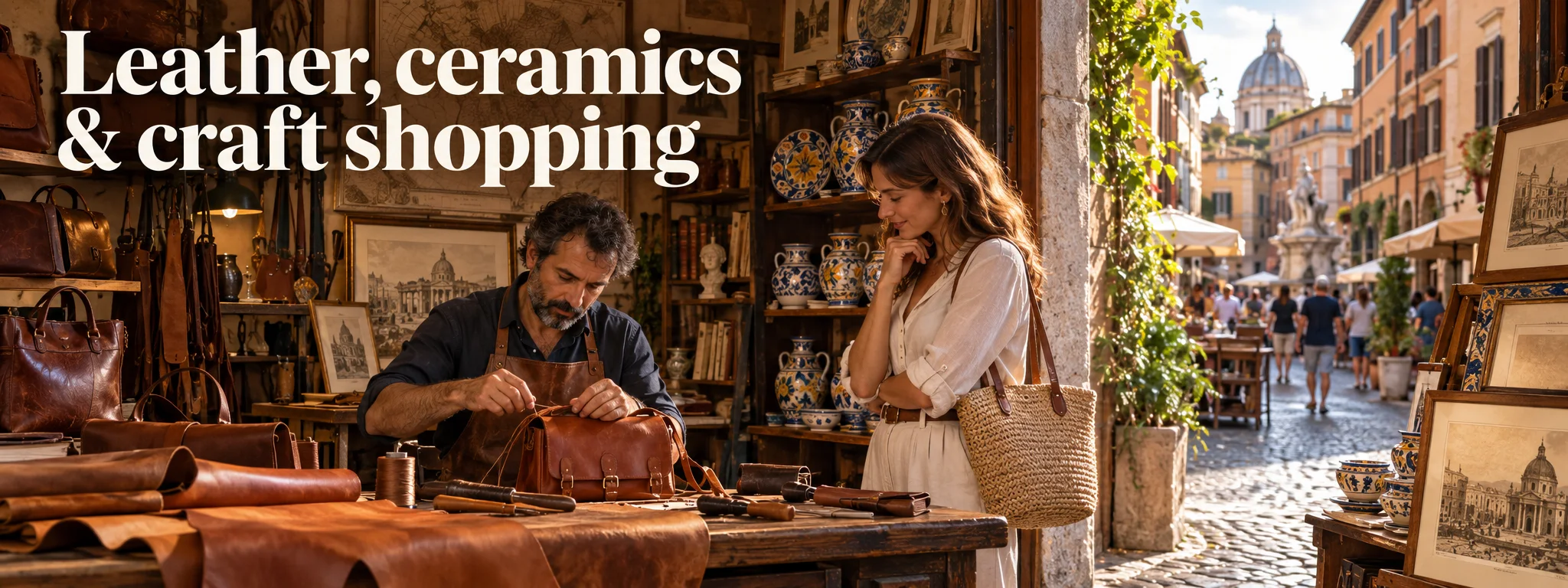
Leather, ceramics & craft shopping
What Italian craftsmanship actually looks like — and how to buy it without getting burned.
Leather
Rome has fewer leather workshops than Florence, but Via del Governo Vecchio and the streets around Campo de' Fiori have independent leather goods sellers where you can watch items being made. Avoid anything near the major tourist sights selling "handmade Italian leather" — the provenance is rarely what it claims.
Ceramics
Deruta-style hand-painted Italian ceramics are sold across the city; the genuine article comes from the Umbrian town of Deruta, and reputable sellers can tell you exactly which workshop made the piece.
Prints & maps
The print dealers around Piazza Navona sell genuine antique maps and engravings alongside reproductions — ask specifically whether something is an original or a facsimile before paying accordingly.
Distinguishing genuine craft from mass import
Genuine Italian leather goods are typically marked with a 'Vera Pelle' (genuine leather) or 'Made in Italy' tag, though counterfeit or imported goods sometimes carry misleading labels too — buying from an established shop with a visible workshop, rather than a street stall, is the more reliable signal of authenticity.
Ceramics specifically
While Rome itself isn't a major ceramics production centre (Deruta and Faenza, both requiring travel beyond the city, hold that distinction within Italy), several Roman shops stock genuine hand-painted pieces from these regions — worth asking specifically about origin if authenticity matters to your purchase.
