 The Rome Index
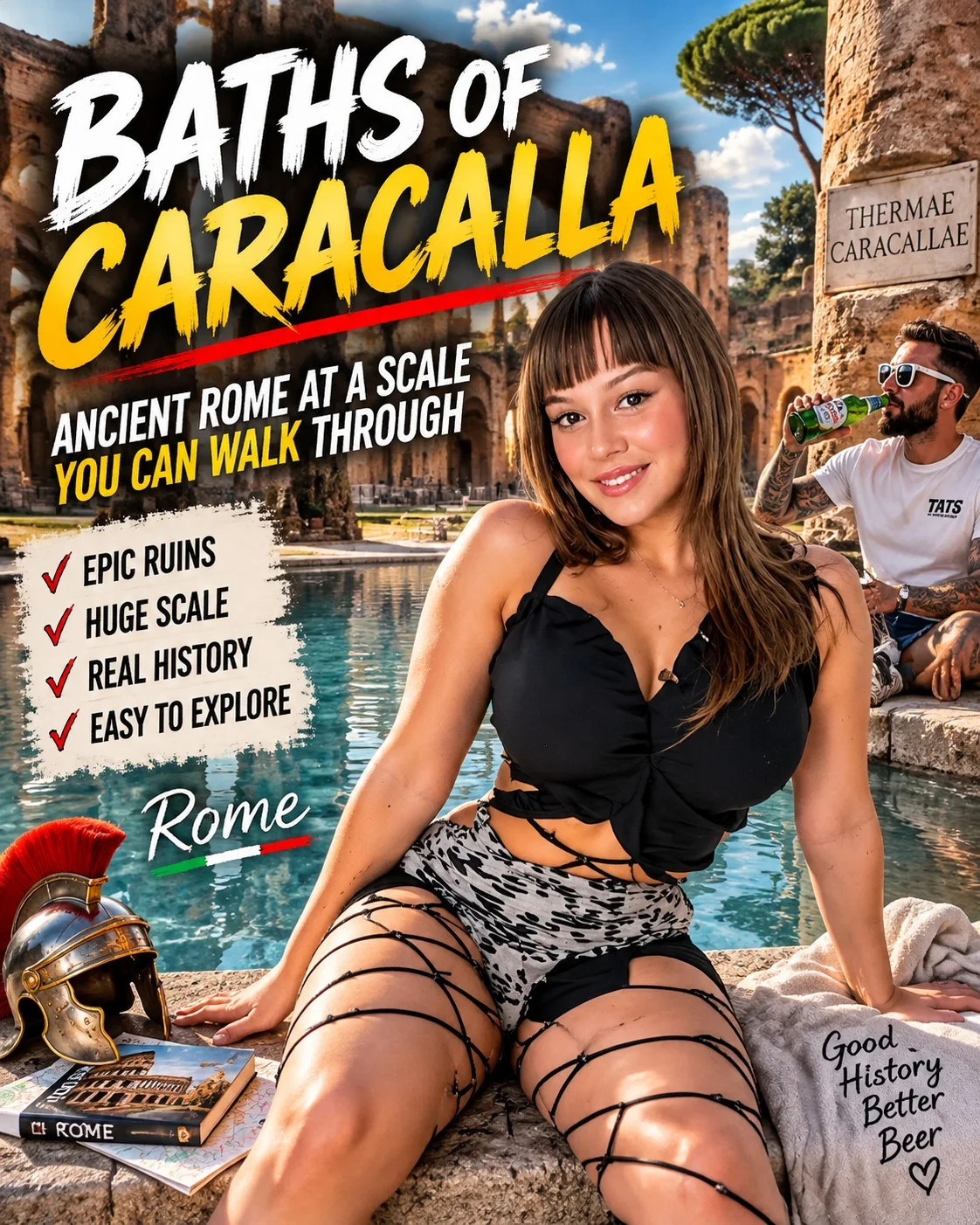
Baths of Caracalla
Huge imperial ruins, mosaics and engineering on a scale that makes ancient Rome feel physical rather than abstract.
Use the Italian Ministry of Culture listing and the official Musei Italiani ticket system for the latest hours, exceptional closures and ticket conditions. For nearby planning, see our Circus Maximus guide and Aventine Hill guide.
Check before you go
The Baths of Caracalla are a strong second- or third-day Rome attraction: famous enough to be important, spacious enough to feel calmer, and visually powerful even if you know little about Roman engineering. They are especially rewarding after you have seen smaller ancient sites and can appreciate how extraordinary this scale was.
Our take
Start by taking in the entire central block from a distance, then move through the main bathing sequence, pause at surviving mosaics and architectural fragments, and finish by looking back across the complex from a different angle. The site makes more sense when you repeatedly reconnect individual rooms to the whole plan.
A simple 90-minute route
Choose Caracalla for outdoor scale, monumental ruins and the physical footprint of a bath complex. Choose the Baths of Diocletian branch of the National Roman Museum for a more museum-like experience near Termini. Serious ancient-Rome fans will appreciate both.
Caracalla or Diocletian?
The easiest combination is the Circus Maximus, Aventine Hill and its churches and gardens. The Appian Way can also fit thematically, but combining both properly makes for a long archaeology day. If you are already doing the Colosseum, Forum and Palatine on another day, Caracalla gives you a different kind of imperial architecture without repeating the same experience.
Pairing Caracalla with nearby sights
The service tunnels beneath the baths reveal the infrastructure that kept the complex running, but access is not identical to the normal daytime route and can depend on special openings. Likewise, cultural performances sometimes change visitor access or closing times. Treat any underground or event visit as a separate product and verify its exact ticket conditions.
Underground areas and special events
In 2026 the Ministry has promoted the Roma X-PAND app as a way to visualise elements of the baths through augmented-reality interpretation. Digital tools can be useful here because so much of the original decoration and volume has disappeared. Download anything you want before arrival rather than depending on perfect mobile reception.
Roma X-PAND and interpretation
The baths work surprisingly well with children who respond to scale and imagination. Instead of explaining every emperor, ask them to picture swimming pools, furnaces, changing rooms and thousands of people moving through the building. Keep the visit shorter in hot weather and bring water.
Families
This is an archaeological site with outdoor paths and uneven historic surfaces, so visitors with mobility concerns should check the current official accessibility information before travelling. Even where step-free routes are available, distances, weather and ground conditions matter. Build in extra time and ask staff about the easiest route through the site.
Accessibility and surfaces
The baths sit south of the historic centre on Viale delle Terme di Caracalla. Circo Massimo is the most useful metro area for many visitors, followed by a walk; buses can also reduce walking depending on your starting point. Check ATAC routing on the day because surface services and diversions can change.
Getting there
In warm weather, go near opening time or later in the afternoon and take sun protection seriously. Much of the archaeological area is exposed. In cooler months the open layout is pleasant, but rain and wind can make the site feel much more exposed than an indoor museum.
Best time to visit
Allow about 90 minutes for a satisfying standard visit, or two hours if you read interpretation, use an app or audio material, photograph carefully and take breaks. Archaeology enthusiasts can stay longer, especially when additional spaces or exhibitions are open.
How long to allow
Look for the huge central halls rather than focusing only on individual fragments. Imagine the natatio, or open-air swimming pool, crowded with bathers; the frigidarium as a monumental social hall; and the heated spaces supported by sophisticated infrastructure. Mosaic floors give some of the clearest clues to the richness once underfoot.
The spaces to notice
The complex opened in the early 3rd century under the emperor Caracalla. Its central bath block organised the typical sequence of cold, warm and hot spaces on an enormous scale, surrounded by exercise courts and service areas. The building was engineered as much as decorated: water supply, heating and underground service circulation were essential to making the spectacle function.
What you are looking at
Normal admission does not generally require a reservation. Tickets can be purchased through the official Musei Italiani system or at the site's electronic-payment totems, subject to current arrangements. Booking becomes more important for special underground visits, performances or limited-capacity events, which have their own rules.
Do you need to book?
Special events and holidays can alter the schedule. In 2026 the site has already published exceptional openings and event-related early closures, so check the official listing on the day before relying on the standard hours.
The Italian Ministry of Culture currently lists the site as open Tuesday to Sunday from 09:00 to 19:15, with last admission at 18:00, and closed on Monday under the normal schedule. The standard full ticket is listed at €8, with the statutory €2 reduced ticket for eligible 18–25-year-olds; temporary exhibitions can add a supplement.
Current opening hours and tickets
They are less visually complete than the Colosseum, but that is part of the appeal: crowds are generally easier to manage and there is room to stand back and understand the architecture.
The Baths of Caracalla are one of the best places in Rome to understand the sheer scale of an imperial public building. The surviving walls rise dramatically above broad open spaces, while mosaics, fragments and reconstructed interpretation help you imagine a complex that once combined bathing, exercise, gardens, libraries and social life.