 The Rome Index
Safety & common scams
Practical ways to avoid pickpockets, distraction scams and transport hassles without being paranoid.
Rome is generally manageable with normal big-city awareness
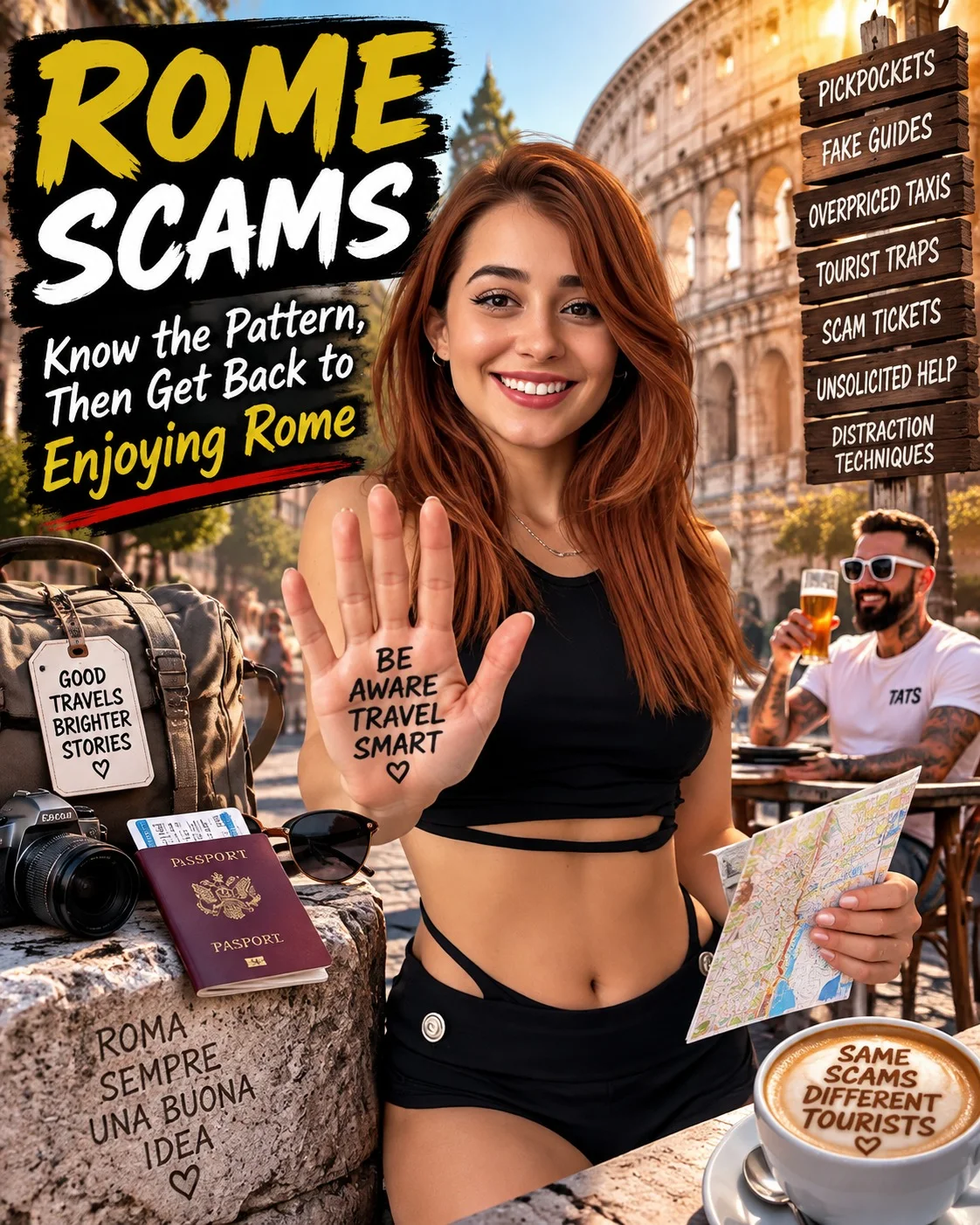
For most visitors the realistic problems are opportunistic theft, distraction scams, unofficial sellers and transport hassles rather than violent crime. The busiest tourist zones create predictable opportunities for pickpockets, so the most useful safety advice is practical: keep valuables controlled, make payment choices deliberately and do not let a stranger rush you into a transaction.
Pickpockets: focus on crowded transitions
Pay extra attention when boarding or leaving metro trains and buses, around Termini, at major attraction queues and in dense pedestrian crowds. A zipped cross-body bag worn to the front is easier to monitor than a phone in a back pocket or an open tote. Do not keep your passport, all cards and all cash in the same place.
Phones are a common weak point
Visitors often protect wallets but leave an expensive phone loose on a café table or in an outer pocket. Use a secure pocket or zipped bag when you are not actively using it. Before the trip, enable device tracking, automatic cloud backup and a screen lock, and keep your accommodation address somewhere you can reach without your phone.
Bracelets, flowers, petitions and other distraction approaches
If someone presses a bracelet, flower or other item into your hand, or tries to pull you into a petition or donation conversation, you do not owe them engagement. A clear “no, grazie” and continuing to walk is enough. Do not hand over your phone, wallet or passport to settle an argument about a supposedly free item.
Unofficial attraction and ticket sellers
Major Rome sights attract sellers promising special access or urgent last-minute deals. Buy from the attraction's official site or a provider you deliberately chose, not someone who intercepts you outside a queue. If a product is described as official, verify the actual operator before paying.
Taxis and airport approaches
At airports and stations, use the official taxi rank rather than accepting an unsolicited ride from inside the terminal. Rome's official taxis are white and regulated. For fixed airport fares, check the current airport or municipal tariff notice because the exact zones and prices can change.
ATMs and card payments
Prefer bank-operated ATMs where practical, shield your PIN and review the currency-conversion screen before accepting it. In restaurants and shops, keep the card transaction visible when possible. Carry a second payment method separately so one lost card does not derail the day.
What to do if something is stolen
Get somewhere calm, freeze affected cards, use device tracking only from a safe location and contact your insurer if a claim may follow. A police report can be important for insurance and document replacement. Keep cloud copies of key documents and policy details so losing your bag does not also remove the information needed to recover.
Emergency numbers
112 is the European emergency number and is the simplest number for visitors to remember for urgent police, fire or medical help. For a non-urgent problem, ask your accommodation or the nearest staffed police point for the appropriate reporting route rather than tying up emergency services.
Night-time judgement
Rome remains lively late, especially around central neighbourhoods. Use the same judgement you would in another large European city: know how you are getting home, avoid isolated shortcuts when tired or intoxicated, and choose a licensed taxi or known transport option when walking no longer feels sensible.
Women, solo travellers and families
The core precautions are similar for everyone, but solo travellers benefit from sharing accommodation details and maintaining a charged phone; families should plan a simple meeting point in crowded attractions. If anyone in your group has a medical or accessibility need, keep the relevant information easy to reach.
Official information
For emergencies and policing, use official Italian authorities; for destination updates, consult Turismo Roma and your government's current Italy travel advice. Treat viral scam lists as prompts for awareness, not proof that every stranger is a threat.