 The Rome Index
Money & cards in Rome
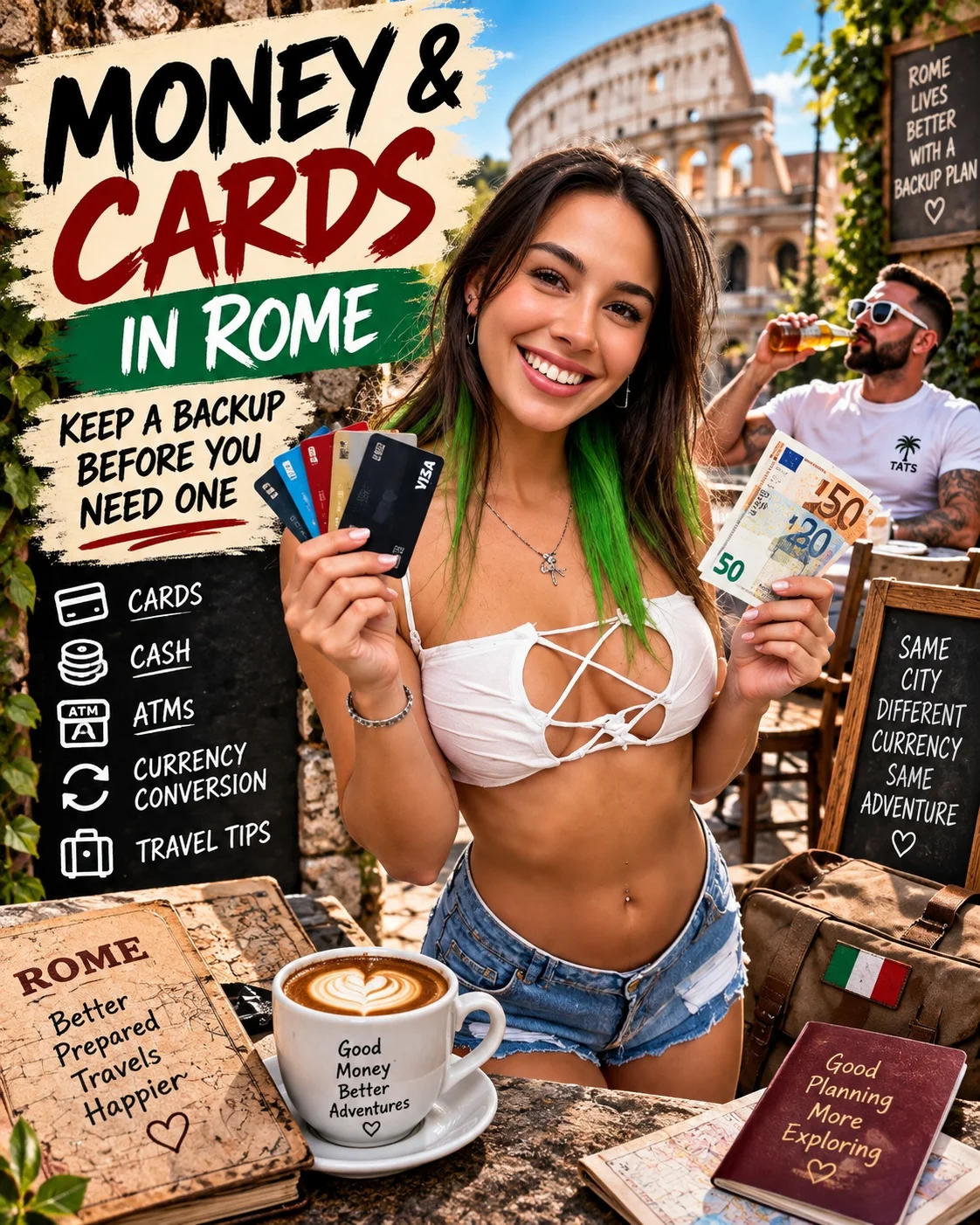
Cards work almost everywhere you are likely to spend, but a small cash reserve and a sensible backup card make Rome much easier.
The short answer: mostly card, with some cash
For most visitors, Rome is straightforward to pay your way around. Hotels, supermarkets, museums, larger bars and restaurants generally take debit and credit cards, and contactless is normal. Rome's official Tourist Infopoints explicitly accept debit and credit cards, and even the controlled Trevi Fountain inner-basin ticket introduced in 2026 can be bought at the entrance by card.
That does not make cash useless. A modest amount of euros is handy for tiny purchases, older vending machines, markets, a bar that is having a terminal problem, or simply splitting a small bill. There is no need to arrive carrying several hundred euros. Start with enough for incidental spending and top up only if your own habits show you need more.
How much cash should you carry?
A practical daily reserve is often €40–€100 rather than a large wad of notes. Keep it separate from your main cards and do not repeatedly open a packed wallet in crowded transport or around major sights. If your accommodation has a safe, leave spare cash and a backup card there rather than carrying everything together.
Using ATMs without paying unnecessary fees
Prefer an ATM attached to a recognised bank branch and read every screen before accepting a withdrawal. Your home bank may charge an international withdrawal or foreign-transaction fee, while the ATM operator may add its own fee. Those costs vary by card and provider, so check your bank before travelling rather than relying on a generic promise of “fee-free” cash.
If an ATM offers to convert the withdrawal into your home currency, compare carefully. In most cases travellers are better served by declining dynamic currency conversion and letting their own card network handle the euro conversion, but the decisive factor is the rate and fee your own bank applies.
Always choose euros at card terminals
The same principle applies in shops and restaurants. A terminal may ask whether you want to pay in euros or in your home currency. Paying in euros usually avoids the merchant or terminal provider setting the exchange rate through dynamic currency conversion. You will still be subject to whatever foreign-exchange terms your own card has.
Contactless, phones and backup cards
Contactless cards and phone wallets are convenient for everyday spending. Do not make your phone your only payment method, though: a flat battery, lost device or bank security check can turn a simple purchase into a nuisance. Carry at least one physical card, and ideally keep a second card from a different account or network somewhere separate.
Tipping in Rome
Tipping is appreciated for good service but is not a compulsory percentage in the way many North American visitors expect. For a coffee at the bar, no tip is required. At a sit-down restaurant, rounding up or leaving a few euros for genuinely good service is normal. There is no need to add 15–20% by reflex.
Check the bill before deciding what to leave. A coperto is a cover charge rather than a tip; a listed service charge is also separate from a voluntary gratuity. If the bill already includes service, you are not expected to tip again unless you want to.
Small notes are more useful than large notes
If you withdraw cash, choose denominations that are easy to spend. Small businesses may be reluctant to break a €100 or €200 note for a coffee or snack. Tens and twenties are much more useful for ordinary visitor spending.
What if a card payment fails?
First try the physical card and PIN rather than repeatedly tapping. If that fails, use another card or cash and check your banking app later. A declined transaction can be caused by a temporary terminal issue, an offline connection, fraud controls or a travel-security trigger; it does not automatically mean the merchant is doing anything wrong.
A simple money setup for Rome
- Use a low-fee card for most purchases.
- Carry a small euro cash reserve for minor or awkward transactions.
- Keep a second physical card separate from your wallet.
- Choose euros rather than home-currency conversion when offered.
- Check restaurant bills for coperto or service before adding a tip.
- Never carry all your cards, cash and passport together.
Bottom line
You can comfortably visit Rome without living on cash. Cards are mainstream, contactless is common and official visitor services accept cards. The best approach is not “cash only” or “card only”, but a card-first setup with a small amount of euros and one backup payment method.