 Totally Rome
Neighbourhoods
Trastevere: a practical neighbourhood guide
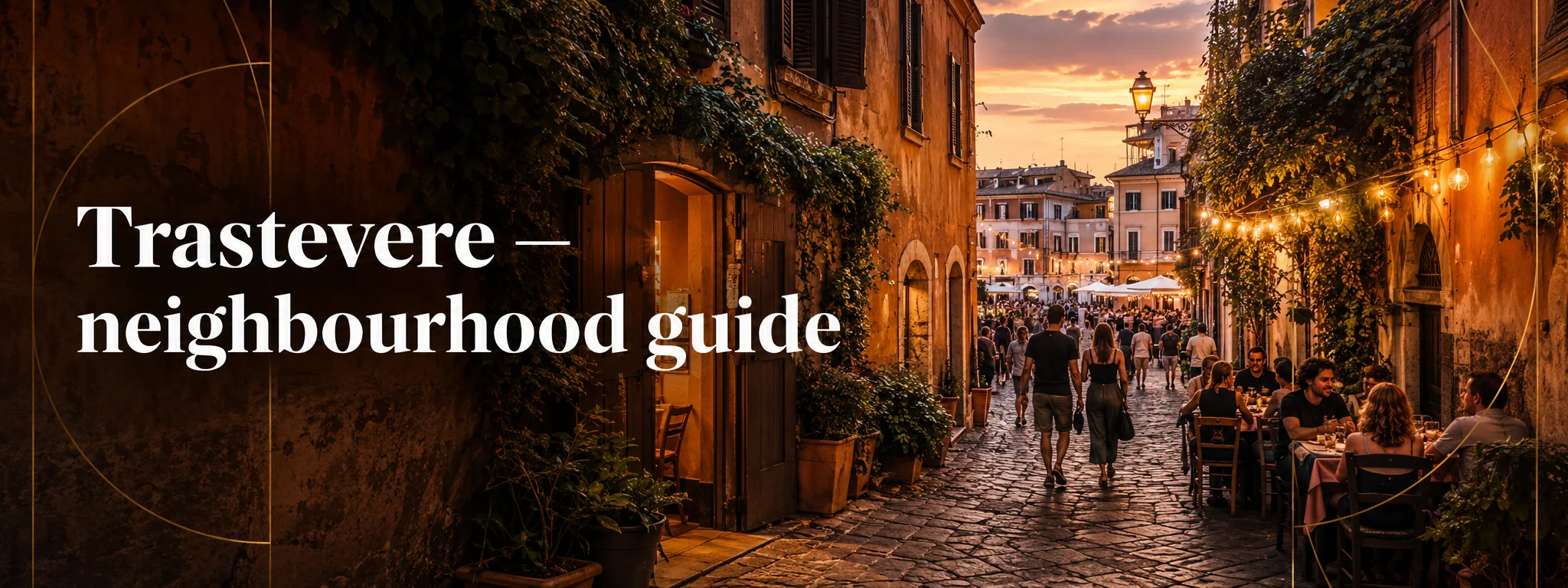
Trastevere is Rome at its most atmospheric: ochre walls, cobbled lanes, church mosaics, tiny workshops and one of the city's busiest evening scenes. It is also more complicated than the postcard version. Come early and it can feel almost village-like; arrive after dinner and the lanes around Piazza di Santa Maria can be packed.
Is Trastevere worth visiting?
Yes — especially if you want a neighbourhood that rewards wandering rather than a checklist of blockbuster monuments. Trastevere sits on the west bank of the Tiber, opposite the historic centre. Its name comes from trans Tiberim, “across the Tiber”, and the old street pattern still gives the district a distinct identity. The strongest visit combines the famous central lanes with quieter edges: Santa Maria in Trastevere, Piazza di San Cosimato, the churches and small squares south of the tourist core, then the river or Janiculum for a change of pace.
The trade-off is popularity. Trastevere is no secret, and its best-known streets can feel intensely visitor-oriented at night. That does not make the district inauthentic; it simply means timing and route choice matter.
The best time of day
Morning is best for atmosphere. Before lunch, delivery vans and residents still shape the rhythm of the neighbourhood, the main piazzas are easier to appreciate and photography is less of a contact sport. Churches are also easier to visit respectfully outside busy evening periods.
Late afternoon into evening is best for energy. Aperitivo terraces fill, dinner queues form and Piazza Trilussa becomes a meeting point. If you dislike crowds, do not judge all of Trastevere by the few lanes immediately around Piazza di Santa Maria after 20:00. Walk five or ten minutes south or west and the mood can change quickly.
Start at Piazza di Santa Maria in Trastevere
This is the obvious orientation point and still worth your time. The piazza is centred on one of Rome's oldest monumental fountains and the Basilica of Santa Maria in Trastevere. Turismo Roma describes the basilica as probably Rome's first official Christian place of worship; much of the present building is medieval, with particularly important façade and apse mosaics. Step inside quietly, then spend a few minutes simply watching the square before choosing your next direction.
A simple first-time walking route
For a two-to-three-hour introduction, begin at Ponte Sisto and enter the neighbourhood through Piazza Trilussa. Continue to Piazza di Santa Maria, then drift south via the smaller lanes toward Piazza di San Cosimato. From there, loop toward San Francesco a Ripa and back through the quieter streets east of Viale Trastevere. If you still have energy, cross toward Tiber Island or climb toward the Janiculum for a broader city view.
This route deliberately avoids trying to “do” every lane. Trastevere works better when you leave space for a church doorway, bakery, courtyard or small shop that catches your eye.
What to see beyond the main piazza
The official Rome tourism material highlights a dense cluster of worthwhile sights: Santa Cecilia in Trastevere, San Francesco a Ripa, Palazzo Corsini, Villa Farnesina, the Botanical Garden and the Museum of Roma in Trastevere. Villa Farnesina is the major Renaissance-art stop; Palazzo Corsini houses part of the National Galleries of Ancient Art; the Botanical Garden gives you a green break beneath the Janiculum.
If your day is already heavy with museums, choose one indoor sight rather than forcing several. Trastevere's streets and public spaces are part of the experience.
Food: how to avoid the weakest tourist traps
Trastevere has excellent Roman food, but high restaurant density also means uneven quality. Treat a waiter aggressively steering passers-by toward a generic tourist menu as a reason to keep walking. A short queue can be a positive signal; a two-hour viral queue is not automatically a better meal.
Look beyond a single famous carbonara address. Traditional Roman options include cacio e pepe, amatriciana, gricia, saltimbocca, seasonal artichokes and fried starters such as supplì. For a casual evening, one good strategy is to eat slightly away from the central piazza, then return for a walk and drink afterwards.
Nightlife without making the neighbourhood miserable
Trastevere is one of Rome's best-known nightlife districts, with bars, pubs, wine bars and people simply gathering in the squares. The busiest atmosphere is concentrated around Piazza Trilussa, Piazza di Santa Maria and the lanes between them. If you are staying here, assume there may be street noise well beyond dinner time and check recent accommodation reviews for the exact building.
Remember that people live above the bars. Keep voices down when moving through residential lanes late at night, do not leave rubbish on doorsteps and avoid treating church steps or private entrances as party furniture.
Festa de' Noantri: the July exception
Trastevere's character changes during the traditional Festa de' Noantri. In 2026, Turismo Roma listed the wider festival from 13 to 27 July, with nine free evening performances in Piazza di Santa Maria from 17 to 25 July and major religious processions on 18 and 26 July. The event is not merely visitor entertainment: it is tied to neighbourhood devotion to the Madonna del Carmine and the Madonna Fiumarola.
If your Rome dates overlap the festival, check the current official programme. Expect more people, temporary street activity and a very different atmosphere from an ordinary July evening. Watch processions respectfully and do not block residents or participants for photographs.
Getting to Trastevere
From much of the historic centre, walking is often easiest. Ponte Sisto gives a direct pedestrian approach from the Campo de' Fiori side; Ponte Garibaldi is useful from the Jewish Ghetto/Tiber Island direction. Tram and bus services run along and around Viale Trastevere, while Roma Trastevere railway station is farther south than the tourist heart of the neighbourhood.
Do not assume “Trastevere station” means you have arrived beside Piazza di Santa Maria. If you are coming from the station, allow for a local connection or a substantial walk. Check live ATAC information on the day because works, events and diversions can alter surface transport.
Where to stay in Trastevere
Trastevere can be a brilliant base for travellers who value evening atmosphere, walkability and independent restaurants more than immediate metro access. It suits couples, repeat Rome visitors and anyone happy to walk across the river to the historic centre.
It is a weaker fit if you are a very light sleeper, need a metro station at the door, or want the fastest possible early-morning connection to Termini. For quieter nights, look toward the southern and western edges rather than directly above the central bar lanes. Always judge the exact street, floor, glazing and guest-review pattern rather than booking on the neighbourhood name alone.
Trastevere with children
Families often enjoy the district in the morning or late afternoon. Piazza di San Cosimato offers more breathing room than the densest nightlife lanes, and the Botanical Garden can provide a useful reset from stone streets and museums. Cobbles make strollers slower, so a compact model and realistic route are helpful.
With younger children, finish dinner before the peak bar crowds rather than trying to push through the busiest squares late at night.
Accessibility and mobility
Trastevere's charm comes with real accessibility friction: uneven cobbles, narrow pavements, steps, crowded lanes and occasional street furniture. Main roads and larger piazzas are generally easier than the smallest alleys. If step-free access is essential, verify individual attractions and restaurants directly and plan a route around the broadest streets rather than relying on a generic “accessible” label.
For a lower-effort visit, focus on Piazza di Santa Maria, the flatter central/southern streets and one pre-checked attraction. The Janiculum climb is optional, not a compulsory part of experiencing Trastevere.
Safety and pickpockets
Trastevere is heavily visited, and the practical risks are similar to other busy parts of central Rome: opportunistic theft, distraction in crowds and phones or bags left carelessly on outdoor tables. Keep valuables controlled in packed nightlife areas and on public transport, and be more alert when tired or drinking.
The answer is awareness, not paranoia. Most visitors spend an enjoyable evening here. Use normal city judgement, choose well-lit routes late at night and keep a backup payment method separate from your main wallet.
Pairing Trastevere with nearby areas
Trastevere combines naturally with the Jewish Ghetto and Tiber Island across the river. The Janiculum sits above the neighbourhood and works well around sunset, while the Vatican side is reachable on foot for travellers comfortable with a longer walk. Avoid pairing it with too many distant attractions just because they fit on a map; leaving time to wander is the point.
A good half-day plan
Arrive around mid-morning, visit Santa Maria in Trastevere, walk the quieter southern lanes and choose one additional sight such as Villa Farnesina, Palazzo Corsini or the Museum of Roma in Trastevere. Have lunch, take a break in the Botanical Garden or along the river, then return toward Piazza Trilussa as the district wakes up for the evening.
If you want dinner here, book a particular restaurant when it matters — but keep the rest of the route loose.
Our take
Trastevere deserves its popularity, but not because every cobbled lane is a hidden local secret. Its appeal is the contrast: major art beside ordinary apartment buildings, religious tradition beside nightlife, tourist crowds beside pockets that still feel residential. Visit at more than one time of day if you can, walk beyond the central postcard streets and treat the neighbourhood as somebody's home rather than an open-air theme park.
Official sources and useful checks
- Turismo Roma — Trastevere, Isola Tiberina and Testaccio
- Turismo Roma — Basilica of Santa Maria in Trastevere
- Turismo Roma — Festa de' Noantri 2026
- ATAC — live Rome public-transport information
